Six Football Forecast Models Ranked by Data Requirements

0

Six forecasting methods can sit behind the same football betting market, yet they demand very different amounts of information. At one end, decimal prices alone can be converted into normalised probabilities. At the other, an xG-based simulation may require shot-level data and thousands of repeated match runs. A price shown by a platform like the betting site in tanzania can therefore provide a market-implied baseline for comparison with an independent model. The ranking below moves from the least data-intensive method to the most demanding. It does not rank accuracy. A simpler model can outperform a complex one when its inputs are cleaner or its assumptions fit the competition better.

1. Market-Implied Probability Sets the Simplest Baseline

The first method starts with three-way decimal prices. It needs no team database.

Suppose the home price is 1.95 and the draw is 3.50. The away price is 4.20. Raw implied probability is:

Implied probability = 1 / decimal odds

The home price implies 51.28%, while the draw implies 28.57%. The away figure is 23.81%. Together they total 103.66%, so the extra 3.66 percentage points represent the market margin in this simplified calculation.

Removing that margin means dividing each raw percentage by 103.66%. The normalised home estimate becomes approximately 49.47%, with the draw at 27.56%. The away estimate is 22.97%.

This is useful as a benchmark for later models. It is not an independent forecast because the calculation begins with the market price.

2. Weighted Form Index Adds Recent Match Context

A weighted form model replaces the simple “last five” approach with a scoring system. Recent results receive values, while venue and opponent strength can change those weights.

That stops a win against a weak opponent from automatically carrying the same value as a win against a much stronger side.

The design problem is sample selection. A very short window can overreact to one unusual result. A long window can dilute a genuine change in current performance.

The six methods differ most clearly in their inputs and outputs:

Rank Forecast model Minimum data needed Principal output Main limitation
1 Market baseline Three-way decimal odds Normalised match probabilities Not an independent forecast
2 Weighted form index Recent results, venues and opponents Short-term performance rating Sensitive to sample selection
3 Elo ratings Results and opponent ratings Relative team strength Does not naturally predict scores
4 Poisson model Goals scored and conceded Scoreline and totals probabilities Simplified scoring assumptions
5 Dixon–Coles Time-stamped match results Corrected low-score probabilities Extra fitting and calibration
6 xG simulation Shot-quality and contextual data Match and season distributions xG values vary by provider

3. Elo Ratings Turn Results Into a Moving Strength Score

Elo begins with a rating for each team and updates it after every result. The size of the change depends partly on opponent strength. Beating a highly rated side therefore carries more information than defeating a much weaker one.

That makes Elo useful for comparing teams across competitions. One major football power-rating system updates daily across more than 600 competitions.

For betting analysis, Elo can be converted into an estimated match-result probability through a chosen formula. It can also support opponent adjustments inside a form model.

Its limitation is output. A basic Elo rating does not naturally say whether a match is more likely to finish 1–0 or 2–1. It also does not directly produce a goals total.

Prices viewed through mobile tools like 1xbet apk tanzania can be compared with an Elo-derived estimate in the same way as other decimal markets. The relevant comparison is model probability against implied probability.

4. Poisson Modelling Converts Scoring Rates Into Scorelines

The Poisson method needs expected scoring rates rather than only win-loss results. A simple version can estimate those rates from goals scored and conceded, with home-away adjustments where appropriate.

Once both rates are set, the model calculates the probability of each side scoring zero goals, one goal and higher totals. Multiplying the two distributions creates a scoreline grid.

That grid feeds several betting markets. Exact-score probabilities come from individual cells. Over/under estimates can be calculated by adding combinations on either side of a chosen total.

Both-teams-to-score probability can also be derived from the matrix. Match-result probabilities come from summing the relevant cells.

The benefit is consistency: one pair of scoring-rate inputs can produce several market probabilities. The limitation is that a basic independent Poisson model treats scoring as more regular than real matches often are. Tactical changes after a goal are not automatically represented.

5. Dixon–Coles Adjusts the Low-Score Problem

Dixon–Coles builds on Poisson. Its main purpose is to correct some dependence that a standard independent model misses in low-scoring football results.

The adjustment is especially relevant around 0–0 and 1–1. It can also alter the treatment of 1–0 and 0–1.

Time-stamped match results allow team strength to change over time, while the low-score correction also needs estimation from the sample.

That creates extra fitting work. A model tuned too closely to old results can look strong historically while performing less well on unseen matches.

For betting analysis, Dixon–Coles is useful when correct-score or match-result probabilities depend heavily on low-score outcomes. It can also feed totals estimates. Its extra complexity is worthwhile only when out-of-sample testing supports the adjustment.

6. xG-Based Monte Carlo Simulation Demands the Richest Inputs

An xG simulation moves from final scores toward the quality of chances behind them. Expected goals assigns a probability to an individual shot using historical attempts with similar characteristics.

Shot distance and angle are common inputs. Body part can add another layer. More detailed models may also include defender positions or goalkeeper location.

A simulation can combine those chance-quality estimates with team-strength assumptions. It then runs the fixture thousands of times to produce a distribution of outcomes.

That distribution can support match-result betting probabilities. Goal totals can be drawn from simulated scores, while the same process can be extended across a schedule for season-position projections.

More data does not automatically mean a better forecast. xG values differ between providers because their models use different variables and training data. Mixing unrelated xG sources can therefore introduce inconsistency before simulation begins.

Historical chance quality cannot guarantee that future chances will resemble the sample. Lineup or tactical changes can make older inputs less representative.

Testing Separates a Forecast From a Fitted Explanation

The six methods form a progression in data demand, not a ranking of guaranteed accuracy. Market probabilities require almost no independent information. Weighted form and Elo add team context. Poisson and Dixon–Coles introduce explicit score modelling, while xG simulations need the deepest data.

Forecasts are more meaningfully tested on matches excluded from the model-building sample. Repeatedly changing parameters until old results look good risks fitting the past rather than improving future estimates.

Calibration matters as well. If a model assigns roughly 60% probability to a large group of comparable selections, the completed results can be checked against that range over a broad sample. One match provides very little evidence.

The final comparison with betting prices comes after that testing. A model probability above the normalised market probability identifies disagreement, not a guaranteed opportunity. Data quality can be imperfect, and model assumptions may not fit a particular fixture.

Complexity has a cost. Each extra layer needs more information and more calibration. The useful model is the one whose inputs can be maintained consistently and whose forecasts remain credible on matches it did not already see.

Model Choice Depends on the Market Being Priced

The most complex forecasting method is not automatically the most useful one. A model works best when its output matches the betting market being analysed and when the required inputs can be maintained consistently.

For a three-way match-result market, a normalised market baseline can provide an immediate reference. Elo can add an independent view of relative team strength. If the question concerns correct scores or goal totals, Poisson becomes more suitable because it produces a complete score distribution rather than a single team rating.

Dixon–Coles becomes relevant when low-scoring outcomes carry particular weight. Its correction can alter the probabilities attached to results around 0–0 and 1–1, which may matter when assessing exact-score markets. The extra fitting process also means that its parameters need to be tested on matches that were not used during model construction.

xG simulations serve a different purpose. They can incorporate richer evidence about chance quality and produce distributions across repeated simulated matches. That makes them useful for individual fixtures as well as longer season forecasts, provided the underlying xG data comes from a consistent source.

The market itself also determines how much precision is useful. A model estimating a home win at 52% and another at 53% may disagree numerically without producing a meaningful difference once uncertainty is considered. Small gaps between model probability and implied market probability deserve caution because input error can easily be larger than the apparent edge.

A stronger comparison therefore asks two questions. First, does the model produce the type of probability needed for the market? Second, has that probability remained reasonably calibrated on unseen matches?

That distinction keeps the ranking practical. Market baselines require almost no independent data, while xG simulations demand far more detail. Moving upward in complexity expands what can be modelled, but it also increases the amount of data that can be measured poorly or interpreted incorrectly.
 

Could Victor Osimhen Solve Manchester United’s Woes?

0

Manchester United endured a difficult start to their Premier League campaign, losing 2-0 to newly promoted Hull City in the first week. It wasn’t the start manager Michael Carrick was hoping for, and it wasn’t the start fans expected when they were drawn against the newly promoted team.

Despite having made some modest investments, by Premier League standards, those acquisitions have come solely in midfield. With time running out in the current transfer window, the Old Trafford recruitment team is likely looking for further additions.

Osimhen Speculation

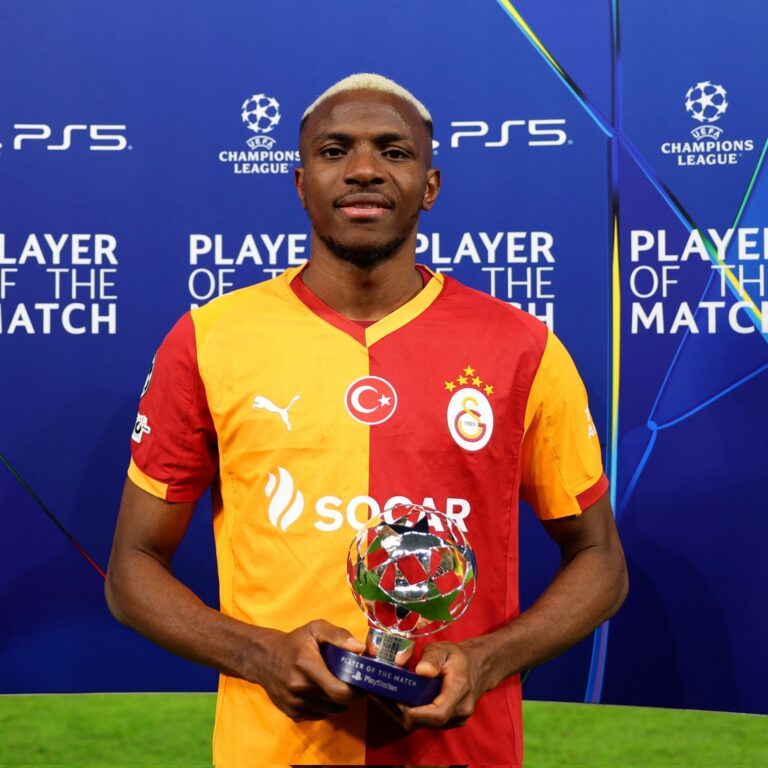
According to Turkish pundit Yetiş Yönetci, Nigerian striker Victor Osimhen would “be the cure for all of Manchester United’s woes” if the Red Devils were to bring the striker in.

Recent reports suggest Arsenal are interested in signing the striker, but that he must lower his wage demands if he wants the move. That could also be a stumbling block for United.

United are one of the richest clubs in the world, profiting from the massive global popularity of football. The game is instilled in popular culture and has been the subject of movies and TV shows. It is also commonly seen in gaming, and is the subject of many video slots and online casino games, both of which can be found at a variety of popular UK bingo and online casino sites. The football industry is therefore in a good spot at the moment to be making some astute investments.

But, despite The Red Devils’ wealth, INEOS have been making moves to lower the club’s costs, with player salaries being one of the biggest expenditures on the books. And, with Rashford still claiming at least £300,000 a week, they would be loath to add another substantial outgoing to their team.  

After their surprise third-placed finish last season, Michael Carrick was handed a two-year deal to continue managing the club. With Champions League football on the calendar this year, fans expected a busy summer of transfers.

United Signings

The window started promisingly, with the Old Trafford outfit quietly bringing in Andrey Santos from Chelsea and Youri Tielemans from Aston Villa. However, signings soon dried up, although a deal for Brighton’s Carlos Baleba has been all but finalised now.

Most experts agree the club needs a new left back, with injury-prone Luke Shaw the only dedicated player in that position. But, there weren’t too many calls for new strikers. Benjamin Sesko looked to be improving last season, scoring 11 goals in the Premier League and performing especially well under Carrick.

Strikers Needed

Joshua Zirkzee is expected to leave, which leaves Mattheus Cunha and Bryan Mbeumo providing cover – but neither of them are recognised strikers. Even Rashford’s return and subsequent reintegration into the squad does little more than provide a backup option.

Sesko made a cameo appearance against Hull, having missed preseason with a shin injury. But, it showed the team’s lack of depth up front. A position that led to former midfielder Owen Hargreaves calling for the club to invest in a new striker.

🚨🎙️Owen Hargreaves: “Well, I think the squad depth is good. I think they could probably do with another STRIKER option, and I think that showed today. Obviously, Sesko didn’t start. Cunha played a little bit deeper. He’s a No.10 not a striker, but he was very effective off the ball”.

According to Turkish reporter Yetiş Yönetci, Nigerian striker Victor Osimhen would be the perfect addition and would hit the ground running. The Super Eagles striker started his career with VfL Wolfsburg. Despite having played for Lille, Napoli, and Galatasaray, and plenty of rumours linking him with some of the biggest teams, he has never found himself at an elite club.

Miura becomes oldest scorer in Emperor’s Cup history

0

Kazuyoshi Miura added another record to a career that began four decades ago, scoring twice for Fukushima United in a 7-0 Emperor’s Cup win over amateur side Oyama Soccer Club on August 19. At 59 years, five months and 24 days, he became the oldest goalscorer in the competition’s history, passing the mark previously held by Shinji Ono at 41. The match also offered an unusual example for people who bet on sport, because a famous name can attract attention even when team strength, expected minutes and the nature of a cup tie matter far more than reputation. Miura’s two penalties turned a comfortable first-round victory into a piece of Japanese football history.

Two penalties settled the record early

Miura started the match and opened the scoring from the penalty spot in the 12th minute. Fukushima were already in control by the time another penalty arrived 10 minutes into the second half, and the veteran forward converted again before being substituted three minutes later.

Match detail Figure
Competition Emperor’s Cup first round
Date August 19, 2026
Result Fukushima United 7-0 Oyama Soccer Club
Miura’s goals Two penalties
Age 59 years, 5 months, 24 days
Previous record Shinji Ono, age 41

Miura had already scored in the Fukushima prefectural qualifying competition in July, ending a wait of almost four years for a competitive goal. Wednesday’s goals were different because they came in the national tournament itself and established a new Emperor’s Cup record.

His career makes the age figure harder to ignore

Miura is now in his 42nd season as a professional. He began his senior career in Brazil in 1986 and later played in Japan, Italy, Croatia, Australia and Portugal. For Japan, he scored 55 goals in 89 appearances.

Those figures belong to a career stretching across several eras of professional football. Miura was already an established international when the J.League launched in 1993. More than three decades later, he is still appearing in competitive matches.

Several details underline the length of that career:

  • his professional debut came in 1986;
  • he has played club football on four continents;
  • he represented Japan 89 times;
  • he is still playing in Japan’s professional league system at 59;
  • his latest national cup goals arrived 40 years after his professional career began.

The record is not simply about one late-career appearance. Miura had to remain fit enough to start a cup match, take responsibility for two penalties and convert both under competitive conditions.

The cup setting explains part of the scoreline

Fukushima United play in Japan’s third tier this season, while Oyama Soccer Club entered as an amateur representative from Yamagata. The gap between the teams was visible in the 7-0 score, and that difference matters when interpreting individual performances.

Cup fixtures between professional and amateur sides can produce unusual lineups, large scorelines and more opportunities for attacking players than a normal league match. That is relevant to betting analysis as well. Anyone assessing a similar fixture should still look first at team strength, likely starters and the possibility of rotation rather than treating one player’s previous goals as a prediction.

Miura’s penalties also show why goalscorer statistics need context. Two goals suggest a decisive attacking performance, but both came from the spot. For future player markets, penalty duties are useful information, while the circumstances that created those penalties may not repeat.

Miura’s preparation showed in the decisive moments

After the match, Miura explained that he practises penalties regularly because he does not know when he may be asked to take one. That preparation mattered twice against Oyama.

His first penalty put Fukushima ahead. The second, scored in the 55th minute, extended a lead that was already secure. There was little drama around the final result, but both penalties still required Miura to convert when the opportunity arrived.

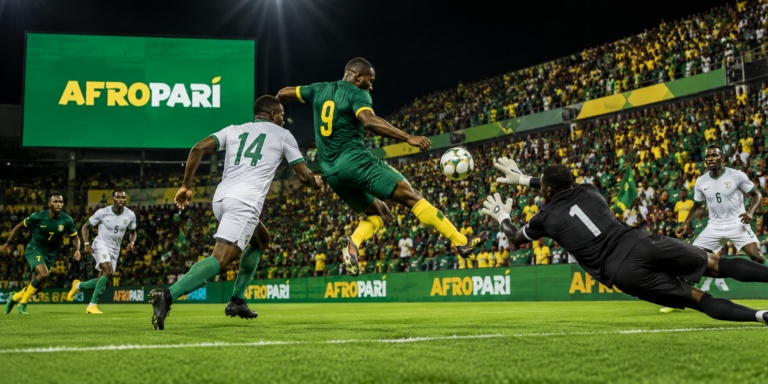
For football followers, including those using Afropari, Miura’s record is a reminder that the story around a player and the information needed for a wager are not the same thing. Age, fame and a historic achievement can make a match more interesting, while decisions about goalscorer or player-stat markets still depend on expected minutes, set-piece duties and the opponent.

Fukushima advance with Miura back in the headlines

The 7-0 win sent Fukushima United into the next round and gave the club one of the notable results of the opening stage. Miura, meanwhile, added another age record only weeks after ending his long scoring drought in prefectural qualifying.

His two penalties will be remembered mainly because of the number attached to them: 59 years, five months and 24 days. Yet the record also reflects something more difficult to sustain. Miura has remained available for competitive football deep into a career that started before many of his current teammates were born.

The Emperor’s Cup has produced countless unlikely stories through its mix of professional, university and amateur teams. This time, the surprise was not an upset. It was a player nearing 60 stepping up twice from the penalty spot and leaving the competition with a record that may stand for years.

AFCON 2027 Qualifiers Put Early Pressure on Group Favourites

0

The AFCON 2027 qualifying draw has left some favourites with far less protection than usual. Most groups offer two tickets to the finals. Three groups offer only one place to teams outside the automatic co-hosts. In a six-match campaign, that difference can punish one poor week.

The first prices are already visible through the officia website betting Uganda, though they still rest on limited evidence. Final squads, confirmed venues and club minutes will alter the early picture. The draw tells us who plays whom. September will tell us which teams are actually ready.

The Host Rule Reshapes Three Groups

CAF placed 48 teams into 12 groups of four at the May draw. Each side will play six home-and-away matches. Under the standard rule, the top two teams reach the finals. The calculation changes in groups containing a co-host.

Each co-host already has a place at AFCON 2027, regardless of its qualifying position. Only the highest-ranked non-host can join it from that group. A non-host could therefore finish second overall and still miss the tournament. That can happen if another non-host finishes first and the automatic qualifier ends lower in the table.

The co-hosts will still play all six fixtures, and their results will count. Their matches cannot be treated as exhibitions or removed from the points calculation. A win against a host carries the same three points as any other victory. Yet selection choices may vary because the host has no qualification place to lose.

CAF has split the campaign across three international windows. Matchdays one and two fall between 21 September and 6 October 2026. The next two run from 9 to 17 November. The final rounds take place from 22 to 30 March 2027.

That schedule creates an awkward five-month pause after November. By then, every team will have completed four of its six matches. A weak opening can therefore sit in the table for an entire winter. There is little time to repair it when qualifying resumes.

Nigeria Faces a Narrow Route Through Group L

Nigeria enter Group L with Tanzania, Madagascar and Guinea-Bissau. Tanzania already hold a finals place as a co-host. Nigeria must therefore finish above both Madagascar and Guinea-Bissau. Their position relative to Tanzania does not decide the available non-host ticket.

That detail changes how second place should be read. Nigeria can qualify from second if Tanzania finish first. They could also finish second and go out if Madagascar or Guinea-Bissau lead the group. The familiar top-two rule does not tell the whole story here.

Home wins would give Nigeria a solid base, but the away fixtures may decide the group. William Troost-Ekong highlighted road results after the draw, and the numbers support his view. Nine home points leave a team needing only a modest return away. Two dropped away matches can turn the final home fixture into a must-win contest.

The opposition presents different problems. Madagascar have shown they can stay organised and make tournament matches uncomfortable. Guinea-Bissau bring experience from recent AFCON campaigns and rarely need much possession to threaten. Tanzania also have reason to compete, even without qualification pressure, because these games form part of their finals preparation.

The first goal could carry extra weight in those fixtures. Nigeria look most comfortable when they can control territory without forcing the final pass. Falling behind allows a compact opponent to defend deeper and protect the middle. It also pushes full-backs forward, leaving more space for counterattacks.

September Form Will Matter More Than Old Status

The opening window arrives only weeks into the European club season. Some internationals will reach camp after starting every weekend. Others may have moved clubs, lost a place or played only short substitute minutes. Reputation cannot close that fitness gap.

Three details should make the early matches easier to read:

  1. Recent club minutes – regular starters usually arrive with sharper timing and better match rhythm.
  2. Defensive continuity – centre-backs and holding midfielders have little training time to rebuild their coordination.
  3. Response after conceding – teams that lose their shape after the first goal carry extra risk in short campaigns.

None of those points predicts a result alone. Together, they show whether an established name still matches the current squad. International football gives coaches only a few sessions before the first fixture. Old combinations help, but only when the players arrive fit enough to use them.

Early prices begin with broad inputs such as rankings, past results and expected home advantage. Better information arrives closer to kick-off. Squad lists reveal missing defenders, and confirmed venues clarify travel demands. The final club weekend adds another check on workload and fitness.

Those squad-driven changes may also appear after a 1xbet login, although a shorter price cannot explain the cause by itself. A move may reflect an injury, a venue update or heavy demand on one side. It may also be a small correction to an uncertain opening number. Football context still matters more than the direction of the move.

Possession figures deserve the same caution. A favourite can hold 65 percent of the ball without creating clear chances. Repeated shots from distance do not equal control of the penalty area. In tight qualifiers, one set piece may say more than a long spell of harmless possession.

The Opening Four Matches Could Define the Campaign

The qualifying draw has done more than produce a list of fixtures. It has created three groups where the leading non-host cannot rely on second place. Group L gives Nigeria that exact problem. Every result against Madagascar and Guinea-Bissau will carry direct weight in the race for one ticket.

September should replace several assumptions with evidence. Coaches will reveal their preferred partnerships, and away matches will test whether the favourites can manage difficult conditions. The first window will also show which teams stay balanced after conceding. Those answers matter more than rankings printed before the campaign.

By the end of November, four of six matchdays will be complete. Some groups may already have a clear leader; others could be separated by one goal. The five-month break will make every dropped point look heavier. March offers a final chance, not a fresh start.

AFCON 2027 runs from 19 June to 17 July. Before the finals begin, the qualifiers must settle several unusually narrow races. The first serious answers arrive in September. For the teams in host groups, there may be no room for a slow beginning.

Dele-Bashiru Becomes Third Super Eagles Player To Pick Early Season Injury

0

Head coach of the senior national team of Nigeria Eric Chelle is sweating on the fitness and availability of three players of the team in the build up to their first game in the AFCON qualifiers in September, OwnGoalNigeria.com reports.

Yesterday reports came out that Semi Ajayi who opened scoring for Hull City in their shock 2-0 win over Manchester United in their opening game in the English Premier League, following promotion from the championship picked up a harmstring injury in the win.

Around four days ago it was also confirmed that new Super Eagles winger Femi Azeez, who made his debut in the summer during the Unity Cup will be sidelined for a while with a muscular issue.

Lazio midfielder Fisayo Dele-Bashiru has now joined the list of injured players after coming off with what looked like a harmstring injury in Lazio’s win over Bologna in the Serie A.

The 25 year old was handed a start by new coach Gennaro Gattuso for their opening game of the season, but was forced off after 54 minutes with Davide Frattesi taking his place.

There has been no update on his situation, but all of that will likely change during the week when he would have undergo a proper diagnosis of the knock.

“Ibadan Boy” Joins Semi Ajayi In Hull City’s List Of Registered Players For The Season

0

English Premier League side Hull City started their campaign following promotion with a shock 2-0 win over Hull City in their opening game of the season, OwnGoalNigeria.com reports.

Nigeria international defender Semi Ajayi opened scoring in what was there first goal in the English top flight in nine years. A goal that set the pace for the win.

Ajayi is however not the only Nigerian in the squad of the Tigers for the English Premier League this season with 30 years old David Akintola also registered in their official team of the season.

Akintola will wear jersey number 30 for the team, and was a part of the team that gained promotion at the end of last season, after joining the team in 2024 on a free transfer from Turkish side Caykur Rizespor.

Born and raised in Nigeria, he started his career in Nigeria with the popular FC Ebedei before making the sojourn to Europe in 2014 when he joined the youth team of Danish side FC Midtjylland.

He has since played for teams in Denmark, Norway, Cyprus and Turkey before his move to Hull who were then in the English Championship.

Mohammed Mowiz Suleiman

Chelle Keen On Bundesliga Star As New Super Eagles Number 10, Wins MOTM

0

Head coach of the senior national team of Nigeria Eric Chelle is yet to throw in the towel in his quest to get Francis Onyeka to commit his international future to Nigeria, OwnGoalNigeria.com can exclusively reveal.

Onyeka was born in Germany to parents of Nigerian descent and has already represented Germany at different youth levels, but not a senior cap yet.

On loan to newly promoted Bundesliga side SV Elversberg, the 19 year old midfielder is seen by Chelle as his top priority for the playmaker role of the team.

Over the weekend, he came of the bench to score twice in the German Cup to hand his team a 3-1 win over MSV Duisburg, and was voted as the player of the match.

” Chelle has been trying to get in contact with him but to no avail, but he is an option that he views as perfect for the playmaker role of the Super Eagles. The only thing holding back a discussion with his camp is his contact or that of his representative”, a source close to the coach revealed.

Mohammed Mowiz Suleiman

Gusau Out: Presidency Snub Emenalo, Anoints New NFF President

0

The days of Ibrahim Musa Gusau as the president of the Nigerian Football Federation are numbered following the adoption of a new leader for Nigerian football by the presidency, OwnGoalNigeria.com reports.

We exclusively gathered that Gusau’s tenure could possibly come to an end on Wednesday when a board member, who is presently abroad returns and make his resignation official.

It will bring the number of board members who have thrown in the towel to nine out of the 12 , and by the statutes of the football house the board will be dissolved accordingly.

Already contracts has been made with who will head the normalisation committee after presidency rejected the choice of former NFF supremo Amaju Pinnick.

The committee will last for three months, and will organise fresh elections into the board of the NFF, and already there is a candidate who has been anointed by the presidency.

We can exclusively reveal that his name was sent to the National Sports Commission (NSC) by the presidency owing to his past association with the president of Nigeria Bola Ahmed Tinubu.

Contrary to talks in the media and suggestions that former Chelsea, Monaco and Saudi Premier League director Mike Emenalo should be made president, the option was never on the table.

The former defender who was a part of the Nigerian team to the 1994 World Cup is seen as an outsider, and won’t be able to pull the amount of support like the candidate picked by the presidency.

Mohammed Mowiz Suleiman

Out Of Favor Super Eagles Winger Open LaLiga Goal Account In Style 

0

Nigeria international winger Chidera Ejuke scored his first goal of the season to push Sevilla to a 3-1 win over Atletico Bilbao, OwnGoalNigeria.com reports.

Ejuke who was deemed surplus to requirements at the club and dropped from their pre season games, somehow appears to have found his way in favour.

Although the club is still looking for market opportunities for his exit, he showed he can still be a part of their future with a well taken goal.

He picked up the ball from almost the center circle, before rounding up his run with a delicate dink over the goalkeeper .

The goal equaled his tally for last season, where he scored just once in all of the games he played. A poor run which also cost him his spot in the senior national team of Nigeria.

Gusau Led NFF Board Near Dissolution Following Resignation Of 8 Members

0

The Ibrahim Musa Gusau led board of the Nigeria Football Federation (NFF) is one member resignation away from being dissolved, OwnGoalNigeria.com reports.

Pressure has been mounted on the board to step down following the recent failure of the women team of Nigeria to qualify for the World Cup. The first time ever.

It is coming on the back of the failure of the men’s team to qualify for the world cup for the second consecutive edition, but Gusau is defiant and want to run for office in the proposed September 21 election in Lafia.

That plan will most likely be shelved according to a report on Arise TV, which says 8 of the 13 board members have decided to quit the board. The resignation of a 9th member will lead to the dissolution of the board.

It will pave the way for the National Sports Commission (NSC) to set up an interim committee to run Nigerian football for three months, pending when fresh elections will be held.

Mohammed Mowiz Suleiman

4 Big Saves: Super Eagles Goalkeeper Power Charlton To Shock Win Over West Ham

0

Newly capped Nigeria international goalkeeper Arthur Okonkwo was imposing between the sticks for his new side Charlton in their shock 2-1 win away to West Ham in the English Championship, OwnGoalNigeria.com reports.

Okonkwo joined the team 48 hours ago and as a show of trust he was immediately handed a start and he didn’t looked out of place.

His team ran to a 2-0 lead and the Nigeria international who is on loan from Wrexham ensured that the score remained that way with four big saves.

West Ham were awarded a penalty in the last kick of the game, but it came off the woodwork earning Charlton a big away win with Okonkwo having a debut to remember.

Capped by Nigeria during the summer, the 24 year old is among the players who will be in the team for the upcoming AFCON Qualifiers games in September.

Mohammed Mowiz Suleiman

How Super Eagles Defender Scored, Assisted For Hull City In Win Over Man Utd

0

Legendary Manchester United defender Peter Schmeichel has praised the performance of Nigeria international defender Semi Ajayi in the 2-0 win over Manchester United in the English Premier League, OwnGoalNigeria.com reports.

Ajayi went into the history books as the first Hull City player to score in the English Premier League for nine years, when he reacted quickly in the box to give his team the lead.

He was on hand again with the ball coming off his head before dropping kindly for his central back partner Noble Mendy to score their second goal. A lead they kept going into the half time break.

Manchester United tried to fight back into the game, but met a well marshalled defence by Ajayi shutting them out for the entire duration of the game. Ajayi earned praises for his performance.

” You have to admire how Hull City defended with Ajayi ensuring that Cunha looked ordinary when he tried to threatened. They defended really well and credit must go to the players at the back, who were also decisive in the other box”, Schmeichel said after the game.